
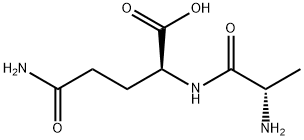
Advantages of Dipeptide Amino Acids over Traditional Monomer Amino Acids in Cell Culture
Advantages of Dipeptide Amino Acids over Traditional Monomer Amino Acids in Cell Culture
In modern biopharmaceutical manufacturing, culture media stability is a key factor determining productivity. Traditional monomer amino acids (such as L-Glutamine) have significant limitations in solution, while dipeptide amino acids (such as L-Alanyl-L-Glutamine) have revolutionized this situation.
Pain Points of Traditional Monomer Amino Acids
- Thermal Instability: L-Glutamine is highly unstable in aqueous solution and degrades spontaneously.
- Generation of Toxic By-products: Its degradation produces ammonia and pyroglutamate. Ammonia is a highly toxic metabolic by-product that inhibits cell growth and reduces antibody glycosylation quality.
- Solubility Limits: Certain free amino acids (e.g., Tyrosine, Cystine) have extremely low solubility in neutral pH media.
Revolutionary Advantages of Dipeptide Amino Acids
Taking L-Alanyl-L-Glutamine (Ala-Gln) as an example, its advantages include:
-
Extremely High Thermal Stability: Dipeptides show extremely high stability under high-temperature autoclaving or long-term storage.
-
Significant Reduction in Ammonia Generation: Cells slowly release and utilize amino acids from dipeptides through peptidase on the cell membrane, avoiding massive degradation of free glutamine.
-
Improved Solubility: Dipeptide forms of Tyrosine and Cystine have several times higher solubility in water than their monomers, allowing the preparation of ultra-high concentration feeds.